
WordPress web design
Websites built to be
understood, found and used.
Responsive WordPress websites with clear journeys, editable content and dependable technical foundations for search and conversion.
More than appearance
A website should explain,
reassure and guide.
Visual design matters, but it cannot compensate for unclear services, weak navigation or a difficult next step. We shape the page structure around what customers need to understand before they feel confident making contact, requesting a quote or completing a purchase.
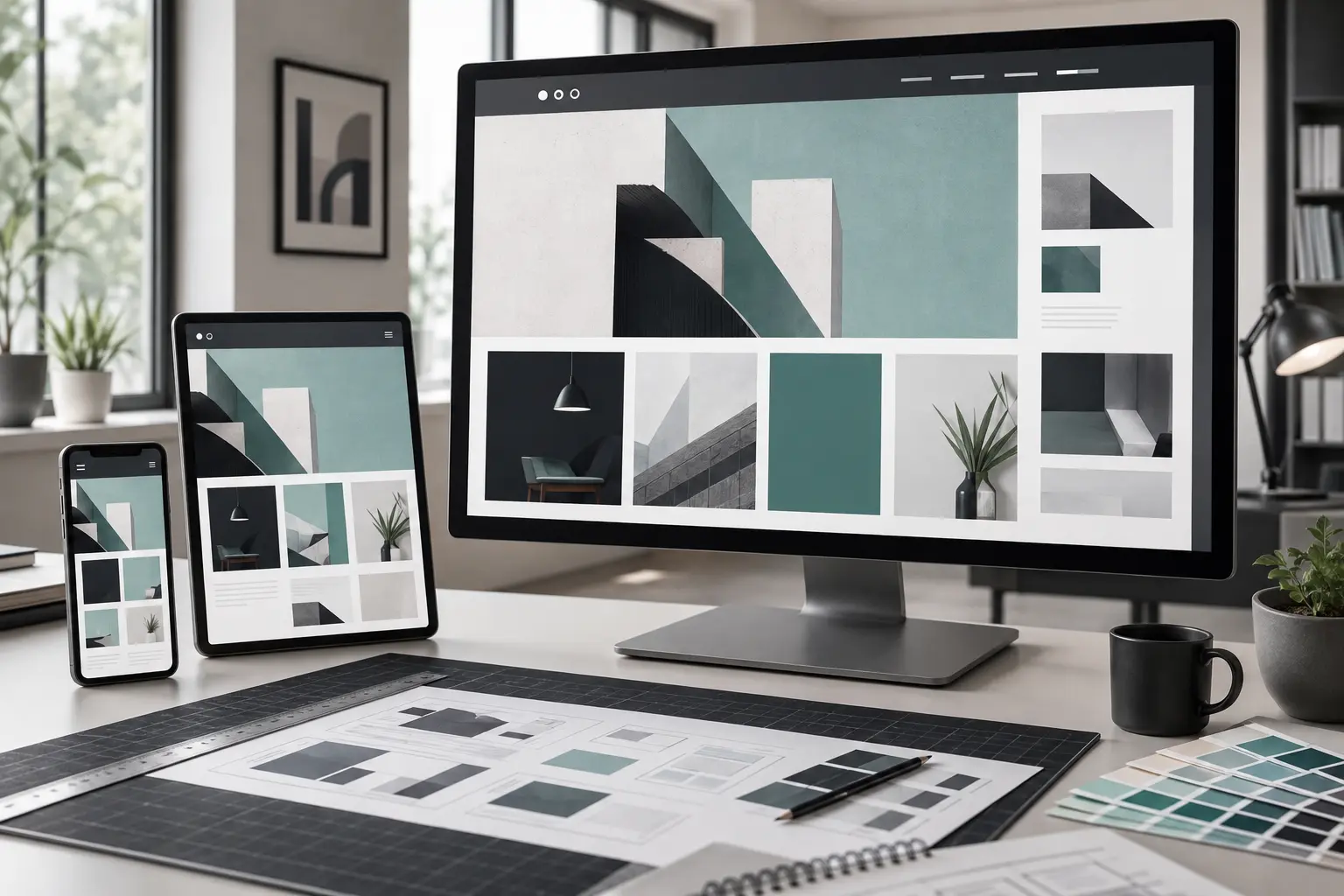
The result is a distinctive WordPress website that remains practical: responsive across common devices, understandable to search engines, accessible to a wider audience and manageable by the people who own it. Routine updates should not require a developer to edit theme files.
01
Clear structure
Pages and navigation organised around what visitors need.
02
Distinctive design
A visual system shaped around the business rather than a generic template.
03
Editable content
Native WordPress blocks for beginner-friendly updates.
04
Search foundations
Technical and on-page essentials considered during the build.
Built for real use
Designed around content and action
Every layout is checked across common screen sizes, with readable typography, sensible spacing and clear interaction states.
WordPress blocks let authorised editors update text, images, buttons, cards and FAQs without changing theme code.
WordPress foundations
Designed for visitors.
Built for ownership.
What a commercially useful website needs
A successful website begins with a clear content model. Important services, products, locations and customer questions need distinct page ownership, while navigation and internal links help people move between related information. We plan this structure before decorating individual screens so the finished design supports understanding rather than hiding weak content behind visual effects.
Each core page is given one primary purpose, a descriptive H1 and a logical H2 and H3 hierarchy. Calls to action are placed where they make sense within the journey, supported by relevant evidence such as project examples, customer feedback, credentials, process information and useful answers. This gives visitors and search systems a clearer account of what the business offers and why it can be trusted.
WordPress editing is treated as part of the product. Text, headings, images, buttons, columns, cards and frequently asked questions are built from native blocks with recognisable controls. Editors can update content without knowing HTML, while carefully named optional classes preserve useful design and hover effects. Header navigation and footer details remain managed separately so routine page editing does not accidentally damage site-wide elements.
Performance, accessibility and security
Responsive behaviour is checked at practical desktop, tablet and mobile widths. We consider readable type, colour contrast, keyboard use, descriptive links, image alternatives, visible focus states and reduced-motion preferences alongside visual polish. Images are cropped intentionally and delivered at sensible dimensions, while scripts and plugins are kept proportionate to the function they provide.
Secure development includes escaped output, sanitised settings, trusted dependencies and clear update responsibilities. No website can be described as permanently secure, but a controlled theme, maintained WordPress installation, dependable hosting, backups and limited administrator access create a stronger operational foundation than a collection of unreviewed plugins and abandoned page-builder components.
WordPress capabilities
Designed around
real business needs.
Each website is scoped around its content, integrations and customer journey rather than a fixed bundle of decorative sections.
01
Responsive design
Layouts that remain clear and usable on desktop, tablet and mobile.
02
SEO foundations
Semantic headings, crawlable content, metadata support and sensible internal linking.
03
Editable content
Core blocks and reusable patterns for day-to-day updates.
04
Plugin compatibility
Careful integration with forms, ecommerce, analytics and other agreed tools.
05
Performance
Optimised images, restrained scripts and sensible loading behaviour.
06
Secure development
Escaped output, maintained dependencies and WordPress best practices.
Delivery process
From structure to
a confident launch.
Clear checkpoints keep content, design, development and measurement moving together.
01
Discover
Clarify audiences, goals, content and technical requirements.
02
Structure
Plan the pages, navigation and journeys before visual design.
03
Design
Create a consistent visual system around the content.
04
Build and test
Develop responsively, check editing, accessibility and core functionality.
WordPress web design FAQs
Practical answers before
the project begins.
Will I be able to edit the website myself?
Yes. Page content is built with standard WordPress blocks and labelled patterns.
Can you redesign an existing WordPress website?
Yes. We can retain useful content and search equity while improving structure, design and usability.
Do you provide hosting?
We can work with your existing host or recommend suitable managed WordPress hosting.
Can you connect Contact Form 7 and analytics?
Yes. Forms, consent-aware analytics and conversion events can be configured as part of the build.
Will a redesign protect existing SEO visibility?
A redesign can protect valuable URLs, content relationships and tracking when migration requirements are considered early. We review redirects, canonicals, metadata, internal links, indexation controls and analytics before launch, then check the live site for material issues. No migration is entirely risk-free, but a documented plan reduces avoidable losses.
Plan the next website
Bring the content and
customer journey together.
Share the current website, your priorities and any content, platform, ecommerce, form or measurement requirements.